top of page

Research

My research intersects community ecology, genetics, and  eco-evolutionary dynamics to examine climate change effects on seasonal meadow, grassland, and vernal pool plants and pollinators.

Drought adaptation in Western US

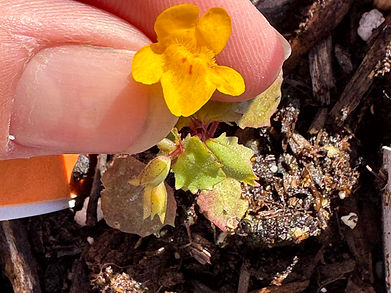
Erythranthe guttata (Mimulus guttatus) adaptive strategies

Drought is a critical selective regime influencing the evolution of plant growth, development, and physiology. As climate change scenarios are predicted to increase aridity in many regions of the world, understanding the mechanisms of how plants avoid or resist water stress is essential. To evaluate strategies and whether populations can adopt different types, I study local adaptation to drought among 31 populations of Erythranthe guttata, a widespread species with a patchy distribution across seasonal wetland landscapes and associated drought-severity gradients.  Methods include wild seed collecting, resurrection common garden experiments, field observations, temperature and soil moisture sensor installation, and molecular genetics techniques. This research is funded by NSF Organismal Response to Climate Change grant. 

Climate effects on a wetland plant-pollinator community

Vernal pool phenology

The many rare and threatened annual flowering plant species in California’s seasonal wetlands, also known as vernal pools, are hypothesized to depend on pollinators for reproduction. Flowering time and the synchronous emergence of pollinators are crucial ecological functions influenced by precipitation and temperature, and deviations from these environmental cues can create phenological mismatches, hindering seed set and plant persistence. I examine how interannual variation in environmental cues affects the onset of flowering plant communities and their interactions with pollinators. I also aim to assess the reproductive effects of pollinator mismatch with controlled treatments creating an optimal, wild, and and no pollinator scenario on Limnanthes douglasii ssp rosea.  Methods include field observations, passive and active sampling, collecting specimen vouchers, hand-pollination crosses, and closely measuring abundance of two vernal pool  species, Trifolium variegatum and Limnanthes douglasii ssp. rosea. 

Seed bank genomics

Seed banks are valuable ecological buffers that help populations persist across unfavorable seasons. A flush of dormant genotypes during post-drought recovery could swamp out adaptations made by the population fraction that germinated during a drought. I am examining dormancy levels in field conditions by combining germination experiments with PoolSeq. By looking for differences in allele frequenceies within and among pools and explore overlap between different gemonic regions, I can determine whether the dormant fraction of alleles harbor adaptive variants and if populations with greater seed dormancy harbor more variation generally.

© 2035 by Katherine H. Gilbert PhD. Powered and secured by Wix

bottom of page