Research
Drought Adaptation Across a Climate Gradient
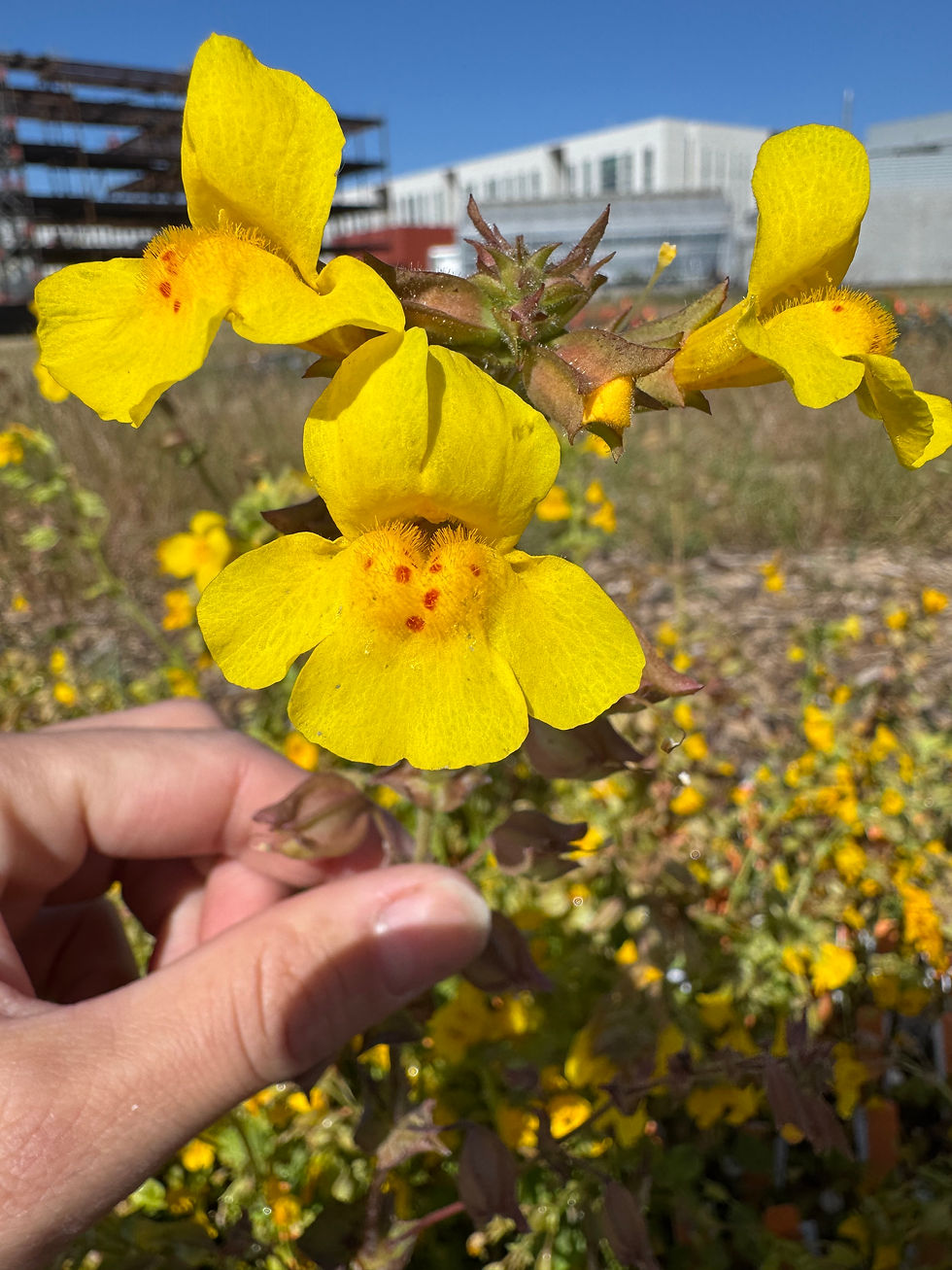
Erythranthe guttata (Mimulus guttatus) adaptive strategies
funded by NSF Organismal Response to Climate Change grant
in collaboration with Ben Blackman (UC Berkeley), Nic Kooyers (University of Louisiana at Lafayette) , Siobhon Brady, Jim Thorne, Daniel Runcie (UC Davis)
Drought is one of the most powerful environmental forces shaping how plants grow, develop, and survive, and as climate change increases aridity across much of the world, understanding how plants cope with water stress is essential.
To explore this, I study drought adaptation across 31 populations of Erythranthe guttata, seep monkeyflower, a widespread California and Oregon native distributed across dramatically different temperature and precipitation regimes. Seeds were collected from the 31 populations both before and after the historic Western United States drought, in 2011 and 2017, capturing a rare window into how populations may have changed in response to an extreme climate event.
Utilizing the collected seeds, we grew ~2200 plants representing all populations, and subjected them to contemporary "drought" water conditions, and water addition conditions in a resurrection common garden experiment.
This natural variation of seed collection years, population breadth, and common garden water manipulations makes it an ideal system for asking:
-
How does the historic local environmental conditions shape a population's resistance to water stress?
-
What strategies do arid versus mesic populations use to tolerate drought?
-
Did the extreme Western U.S. drought impose selective pressure on these populations to alter their strategies?

Soil moisture and temperature
sensor installation in wild seep monkeyflower populations

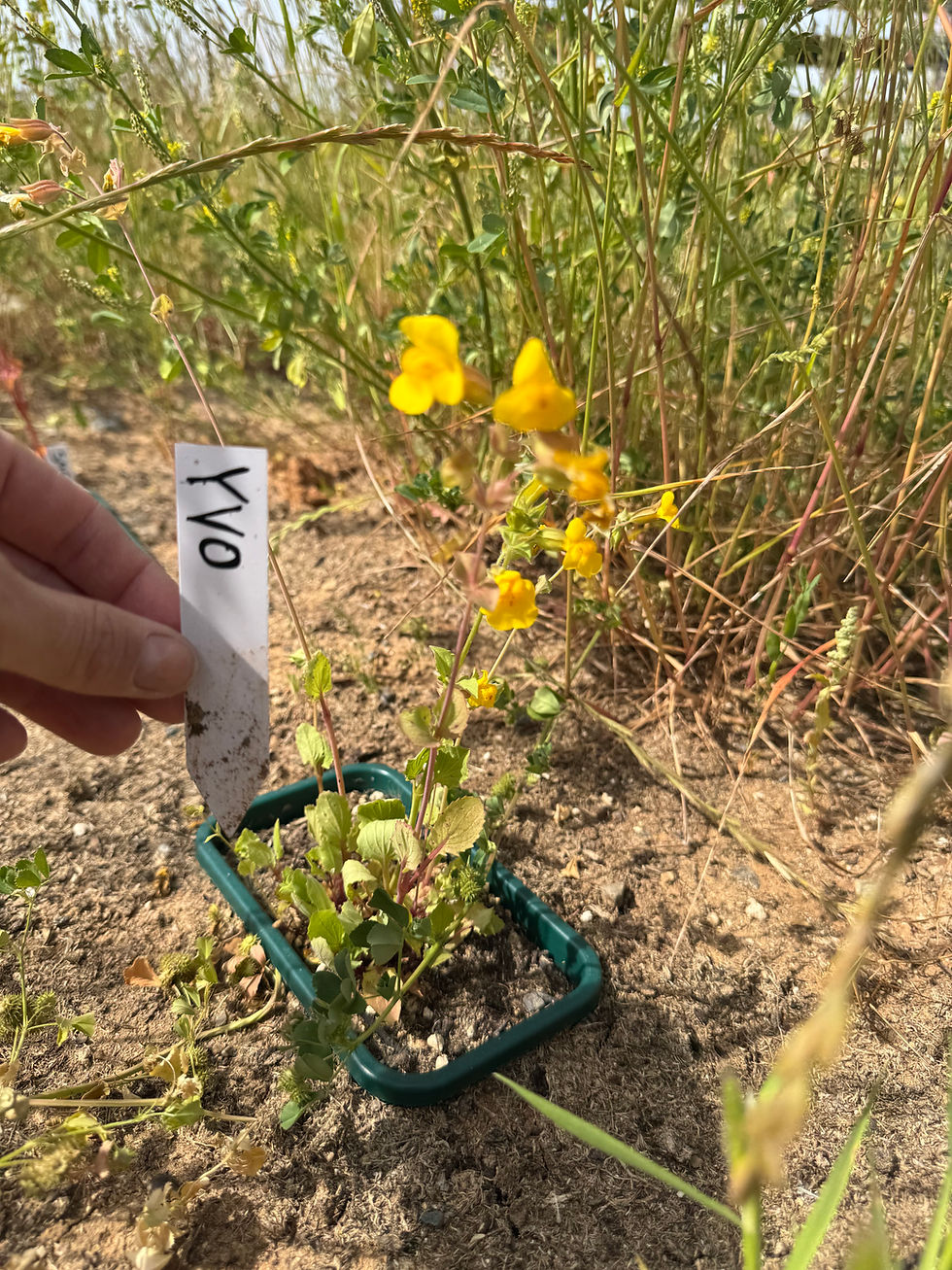
Seep monkeyflowers growing in a dried stream bank, Merced, CA

Trays of germinated seep monkeyflowers, ready to be planted in the garden

Erythranthe guttata resurrection common garden experiment
Erythranthe guttata seed bank genomics
Seed banks are valuable ecological buffers that help populations persist across unfavorable seasons. A flush of dormant genotypes during post-drought recovery could swamp out adaptations made by the population fraction that germinated during a drought. I am examining dormancy levels in field conditions by combining germination experiments with PoolSeq. By looking for differences in allele frequenceies within and among pools and explore overlap between different gemonic regions, I can determine whether the dormant fraction of alleles harbor adaptive variants and if populations with greater seed dormancy harbor more variation generally.